Friday, May 16, 2014

Otterbrook Farm
By: Jordan Kania, Emma Mellon, Sylvie Holding

Over the past couple of weeks our science class has been learning about convection, conduction, and radiation.  We had a guest speaker, Ted Stiles.  He came in and talked about his career as an energy auditor. He goes to houses and helps people figure out ways to save money on energy costs. After learning more about the ways that heat can be lost, we went to Otterbrook Farm.  There we saw multiple examples of heat loss.  It can be lost from poorly insulated walls, ceilings, ducts, windows, beams, doors, floors, and many more.  While there our job was to figure out where the house was losing the most heat and suggest ways to fix it.  Ted also helped us learn the different types of insulation and the R-values of each, and where each belongs.  
When we got back we had a project on convection and conduction of heat loss.  We had to make a water bottle holder that would reduce heat loss.  The limitations to this project where that it had to be no more than  5” in diameter and 10” in height.  Also we had to use the insulation provided however, we could bring materials from home as well.  After we built the holder we were instructed on how to measure the temperature of the water every minute for 30 minutes using a labquest.  After 30 minutes of the labquest test, we discovered with our design, the temperature of the water only rose 1.2 degrees celsius.  In our class we had the lowest change in temperature out of seven groups.
Wednesday, April 16, 2014

Earth As We Know It


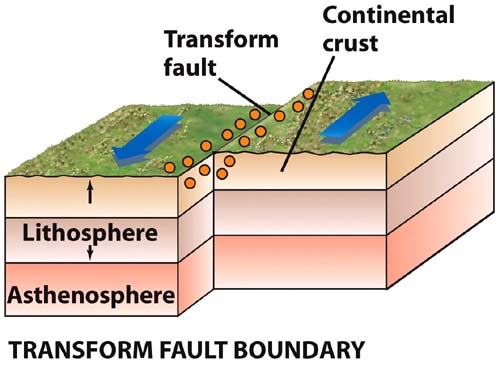
About 256 million years ago all of the continents were one, called Pangaea (the mother of all continents). Due to the occurrence of plate tectonics Pangaea is no longer one big continent (baby continents).  Plate tectonics have to do with the lithosphere that is broken into pieces that “float” on the asthenosphere, mantle convection causes the movement of the lithospheric plates.  There are three ways the plates can move.  The first is divergent plates, which means they move apart from each other creating a mid-ocean ridge.  The second is convergent plates, this is when the plates move towards each other causing surface features such as mountains and volcanoes.  Finally the third is transform plates, this is when the plates slide past each other causing earthquakes.  
Recently, there have been a string of earthquakes in Idaho. They have small magnitudes and thankfully haven't caused any injuries. Idaho is on the center of a seismic belt. Scientists say the the earthquake is due to molten rock movement under the crust. Although it's not too serious, scientists are also recommending to keep water and canned foods available.


http://academic.brooklyn.cuny.edu/geology/grocha/plates/images/transform1.jpg

This is a picture of a transform boundary which is where most earthquakes occur.


Click the link to learn more!

http://www.huffingtonpost.com/2014/04/16/idaho-earthquakes_n_5156670.html

What Goes Around Comes Around

What Goes Around Comes Around

  There are conflicted opinions about whether or not the United States should be held responsible for helping nations who are suffering due to global warming.  Our opinion on whether we should help or not is that we should.  Other people think that we need to focus on helping our nation first and “rise above the poverty line.” However we feel that that is selfish because the United States is able to help because we are not suffering from the causes of global warming nearly as much as other areas.  Therefore it is our duty to help other suffering areas so when we need it they will help us.  If we do not help others then when we need it the most no one will be there to help us.

Monday, March 24, 2014

Nuclear Fusion

Should Nuclear Fusion Be Pursued As An Energy Source?

Yes, nuclear fusion should be pursued as an energy source because all of the fossil fuels are slowly decreasing and we are going to need something to give us power when it all runs out. Although  nuclear fusion is very  expensive, the cost is worth the toll because nuclear fusion is everlasting. Since there will not be any fossil fuels left to use, finding another source of energy is pertinent. We need nuclear fusion to further scientific research, and daily life.      

Wednesday, March 19, 2014

ITER

ITER
By: Emma Mellon, Jordan Kania, and Sylvie Holding


In about a decade the most complex machine ever built, will be completed. It is called ITER (International Thermonuclear Reactor). The process in which it produces energy is when, two isotopes of hydrogen, deuterium and tritium are being pushed together creating helium-5. Helium-5 has an extra neutron which is released generating energy. All this is taking place in the “magnetic bottle" which is a bunch of magnets in a heated cloud. The process of creating ITER has taken thirty five countries, billions of dollars, and eight plus years of intense effort. However, ITER could solve the worlds energy problems. With ITER in place there would be little to no pollution.  While fossil fuels are decreasing, ITER uses seawater and lithium, thus never running out.

http://www.nature.com/news/2009/090527/full/459488a.html

Monday, March 10, 2014

MURDER!!!!

Murder
By: Sylvie Holding, Emma Mellon, Jordan Kania


Welcome back readers! Our second experiment of the class was to solve a murder. We were asked to identify an unknown substance found on the dead body. I know what you’re probably thinking, how can inexperienced investigators solve a crime? However, we looked at the scenario, shown under, and we took careful steps, listed in the procedure, to eventually solve this complex task.


Who did it?
A forensics lab


Yesterday at 3 AM, at Mike's Awesome Bakery in Francestown, NH the baker arrived to find his assistant baker dead: lying in a pool of blood.  The victim's body was covered in a white powder.  


In an attempt to find the source of the white powder, investigators collect multiple samples from the bakery (baking soda, flour, baking powder, powdered milk, cornstarch).


Investigators are in the process of interviewing employees of the bakery to narrow their field of suspects.  They are also gathering clothing samples from employees to find a match for the white powder.
photo 4.JPG


Materials
-baking soda
-baking powder
-flour
-cornstarch
-vinegar
-iodine solution
-universal indicator
-water
- one sheet to put all powders and liquids onto
-lab materials (beakers, stirrers, pipettes, ect.)


Procedure

- Get all listed materials
- Put one powder on the sheet in its designated spot (ex. the baking soda goes in the baking soda spot)
- Drop 4 drops of water on each powder in the first column
- Repeat step 3 substituting each liquid listen

- Record what happens to each powder as the liquid is added
- Match the unknown substance to one of the known substances listed

photo.JPG


Conclusion
The substance that needs to be identified is baking powder. This can be determined because the baking powder and the unknown substance had the same reaction to all the liquids.

Tuesday, March 4, 2014

The Flaming Marshmallows

Flaming Marshmallows
By: Sylvie Holding and Jordan Kania


In our science class we were learning about the scientific method, and had to create an experiment. We had to think of a question that we wanted to answer, then write a hypothesis.  We created a materials list and a list of the steps we were going to follow. Then we conducted the experiment. Our experiment was which substance would burn a marshmallow faster, we used hand sanitizer and isopro.  


­Lab Design Sheet:
Name of Experiment: Flaming Marshmallow                       
Question to be answered: What marshmallow will burn faster?
                      
Prior Knowledge: isopro tends to make substances burn faster.
Hypothesis:Prediction (If …we do X…then…Y will happen…)
If you put a marshmallow in gas and set it on fire then the marshmallow will burn faster than germ x because isopro burns faster.    

Hypothesis:Rationale (…because…)

Because isopro burns faster.
Independent (Manipulated) variable/cause (what will you determine?):
Germ-x, isopro
Dependent (Responding) variable / effect (what will you find out?):
How fast it burns
Constants (what will you keep the same?):
Amount of dipping substance, and beaker size.
Equipment:
3 Beakers, 1 marshmallow stick, 3 Mallows, Germ-X, isopro.


Procedure:
  • Figure out the materials that we need based off the materials list
  • Bring in marshmallows, beaker (of the same size), marshmallow sticks, gas and isopro.
  • Measure out 100 ml of the different substances into the beakers.
  • Put one marshmallow on the stick.
  • Soak individual marshmallow in one of the substances for one minute.
  • After the minute is up take the marshmallow out of the substance and light it on fire.
  • Time how long it burns for.
  • Repeat for the next marshmallow but soak in separate substance.
ANALYSIS: (Summarize what happened; staple graphs, etc. to this sheet)


The hand sanitizer burned clear, isopro burned with a normal flame. Isopro burned faster than the hand sanitizer. The isopro soaked marshmallow burned in 41 seconds and the one in the hand sanitizer soaked marshmallow burned in 45 seconds.
CONCLUSION: (What is the scientific explanation for these results?  Use relevant vocabulary terms.)
Isopro burns faster than the Germ-X, and has a prominent flame whereas the germ-x has a clear flame. In conclusion we were able to prove our hypothesis correct in saying that the isopro soaked marshmallow will burn faster do to the higher flammability.